Measuring human intelligence: the ultimate brain teaser
Human intelligence? Forget what you think you know! For over a century, scientists have been trying to pin down the boundaries of our cognitive abilities — something we all recognise yet struggle to fully define.
An investigation by Mélissande Bry - Published on , updated on
Defining and measuring intelligence: the 'g factor'
In everyday life, what we call 'intelligence' really depends on what skills we value most. For some, it’s solving a complex maths problem; for others, it’s having a razor-sharp wit, an extraordinary memory, or even picking up the clarinet in just a few days. But in psychology, intelligence is defined much more precisely.
The most widely accepted psychometric theory of intelligence — the Cattell-Horn-Carroll (CHC) model — emerged and was empirically tested in the second half of the 20th century. This model views intelligence as a multidimensional, interconnected system of cognitive abilities. These include skills like verbal and language proficiency, visual-spatial reasoning, numerical and arithmetic aptitude, processing speed and fluid reasoning, abstract thinking and both short- and long-term memory, all of which can be measured through standardised tests. Psychologists have observed that people who excel in one type of cognitive test often perform well across others, meaning these tests are positively correlated. This suggests there is something all these cognitive abilities have in common, the 'g factor’, which represents a person’s general intelligence
The 'g factor' is what forms the basis of the celebrated IQ (intelligence quotient) score: a standardised number that compares one person’s performance to that of other people of the same age within a given population.
By convention, the average IQ is 100. A score below 70 may suggest an intellectual developmental disorder, while a score above 130 is often considered a sign of giftedness or high intellectual potential (HPI).
Online IQ tests: proceed with caution
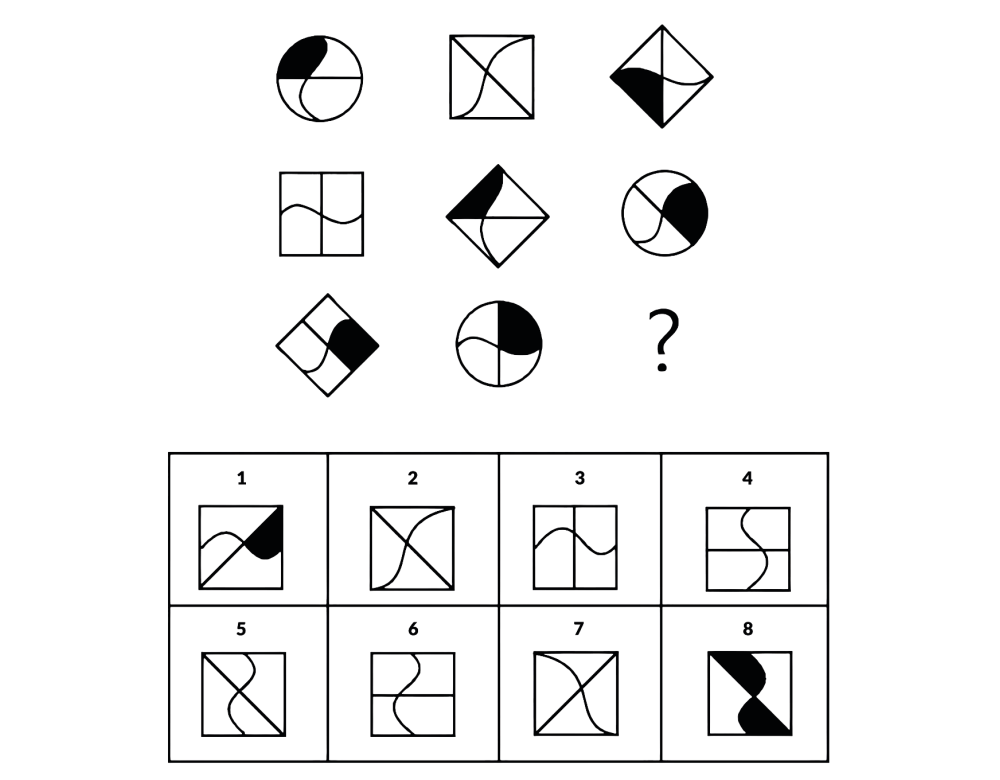
Free, quick and straightforward, countless IQ tests are just a click away. Many use exercises inspired by Raven’s Progressive Matrices, which claim to measure analytical reasoning, abstract thinking and perception. The world’s most widely used IQ tests, however, are the Wechsler scales. They consist of about a dozen subtests, measuring everything from vocabulary and maths to puzzles, pattern recognition and memory exercises. These tests are administered in clinical settings by qualified psychologists, who use them to create a detailed psychometric profile of a person and help diagnose any potential cognitive or developmental disorders.

Gender differences
Are men smarter than women? No, there is no significant difference in IQ between the sexes. However, performance varies slightly depending on the specific cognitive skill being tested. For example, women tend to perform better on average in mental processing speed, while men often excel in spatial visualisation tasks. Current research suggests that the way boys and girls are raised and socialised influences some of the differences we see in cognitive skills, but genetics and biology also play a part.
Other types of intelligence?
The theory of multiple intelligences, popular in education, is often presented as an alternative to general intelligence and the ‘g factor’. However, most psychologists agree that it lacks scientific support. First proposed in 1983 by Howard Gardner, the theory argues that IQ tests measure certain cognitive abilities such as verbal, logical-mathematical and visual-spatial skills, but overlook other, more independent forms of intelligence, including musical, kinaesthetic, naturalist, interpersonal and intrapersonal abilities.
Despite its popularity, Howard Gardner did not provide empirical evidence to back up his theory. The five extra 'intelligences' he describes are tricky to measure clearly and objectively, and, like the other three, seem more like intercorrelated cognitive abilities than separate 'intelligences'.
This theory appeals to teachers because it’s more egalitarian, and in this light, early criticisms of IQ tests are fair enough: they do not measure social or emotional skills, musical or manual talents, curiosity, creativity, humour or abilities such as planning, adaptation and inhibition, all essential to everyday life. But before they can be considered part of general intelligence, they must first be clearly defined, and appropriate tests developed to measure them reliably and consistently.
Emotional quotient
Alongside IQ tests, other assessments measure social and emotional skills, giving each person an EQ or emotional quotient score. Different approaches exist. One performance-based method, for example, requires people to recognise facial expressions, with responses marked right or wrong, but it measures only a limited set of cognitive skills. Another approach relies on self-report questionnaires, like those in personality testing. These can be biased, making their reliability for assessing emotional intelligence debatable.
Do we inherit intelligence?
Do we inherit intelligence like we do size or eye colour? Scientists have at least six ways to estimate heritability and they don’t all give the same answer. Before advanced genome sequencing was developed in the 2000s, researchers measured the heritability of a trait by studying families. Focusing on identical and non-identical twins and adopted children, they found that genetics accounts for roughly half of IQ variations.
So is there a single gene for intelligence? No — there are hundreds. This was shown about fifteen years ago through genome-wide association studies (GWAS). GWAS enabled scientists to sequence the genomes of large cohorts of unrelated individuals and link genetic variations to specific phenotypic traits, including IQ scores. This research suggests that genetics explains about 20% of intelligence.
Neuroscientists, therefore, estimate that intelligence is 20% to 50% heritable. This does not mean that genetics determines 20%–50% of every individual’s intelligence, while the environment accounts for 50%–80%. Heritability is a population-level statistic. A child with high genetic potential may still perform poorly in a low-stimulation setting. Studying the genetic basis of intelligence can nonetheless improve support for people with intellectual disabilities.

The role of social and environmental factors
Our mental abilities are shaped by numerous environmental factors, especially during neurocognitive development, from pregnancy through to our early twenties. Malnutrition and exposure to disease before and after birth, for example, are linked to lower IQ scores in adulthood. Psychosocial factors, such as the socioeconomic status of our parents, also play a role, with children raised in more advantaged environments tending to perform better on IQ tests. A 2018 meta-analysis found that schooling is the most powerful tool for boosting children’s intelligence, increasing IQ scores by 1 to 5 points for each year spent in school.
High intellectual potential: myths vs. reality
Over the past twenty years, the term 'high intellectual potential' (HPI) has gained widespread media attention, even becoming the title of a hit TV series. Scientists generally define HPI as an IQ score of 130 or above, a threshold reached by 2.3% of the population. While HPI individuals have always existed, myths, misunderstandings and stereotypes about them persist.
The most common misconception is treating HPI as a medical condition to be diagnosed. In fact, it is widely accepted that having an IQ above 130 is not a disability, but simply a reality. So we don’t talk about diagnosis — we talk about identification. Another common belief is that individuals with HPI struggle in school, unable to adapt to an educational system that does not foster their abilities. In reality, research shows that HPI students generally perform well academically, are more likely to pursue higher education and tend to enjoy a higher overall quality of life as adults.
Another widespread myth is that individuals with HPI are more prone to psychological disorders such as depression, generalised anxiety or attention deficit hyperactivity disorder (ADHD). Research, however, shows this is not the case: a high IQ may even protect against conditions such as anxiety or post-traumatic stress disorder (PTSD). These persistent misconceptions largely arise from sampling bias: the HPI individuals who seek psychological help or undergo testing are typically those experiencing difficulties, often for reasons unrelated to their intelligence.
The giftedness industry
Much of the information circulating about HPI lacks scientific support and continues to reinforce harmful misconceptions. Numerous books, conferences, blogs and seminars offer advice of varying quality, and there are even expensive specialised training centres for gifted children. Non-profits and caregivers have warned of a growing “giftedness industry” that primarily targets affluent parents and vulnerable adults. Attempts to identify individuals as HPI can lead to diagnostic errors and delay appropriate treatment, particularly for conditions such as autism or ADHD.

Collective intelligence
As the saying goes, “Alone, we go faster; together, we go further”. But is a group always smarter than a highly gifted individual? Sometimes yes, sometimes no — it depends on the context, the problem and the composition of the group. Researchers have only recently begun studying collective intelligence, with the earliest article on the topic published in 1971. Today, there are over 9,000 publications spanning multiple disciplines. These studies examine a variety of paradigms, from swarm intelligence in ant colonies to collaborative work in businesses, the “wisdom of crowds” popularised by James Surowiecki, and the influence of social dynamics on group performance.
In a 2010 study, researchers at the Massachusetts Institute of Technology developed a series of tests to measure group intelligence and identify a common factor, which they called the ‘c factor’ — a collective counterpart to the individual ‘g factor’. Their findings suggested that the ‘c factor’ is not determined by the individual IQs of group members, but is instead correlated with the group’s empathy and listening skills — abilities that are generally stronger in women, partly due to gendered socialisation.
While the robustness of the ‘c factor’ remains debatable, effective collective problem-solving relies on the social sensitivity of group members and their cognitive diversity —the variety of thinking styles, reasoning approaches and ideas within the team. Researchers suggest that this diversity of perspectives fosters the generation of more ideas and more creative solutions.
Does AI threaten our intelligence?
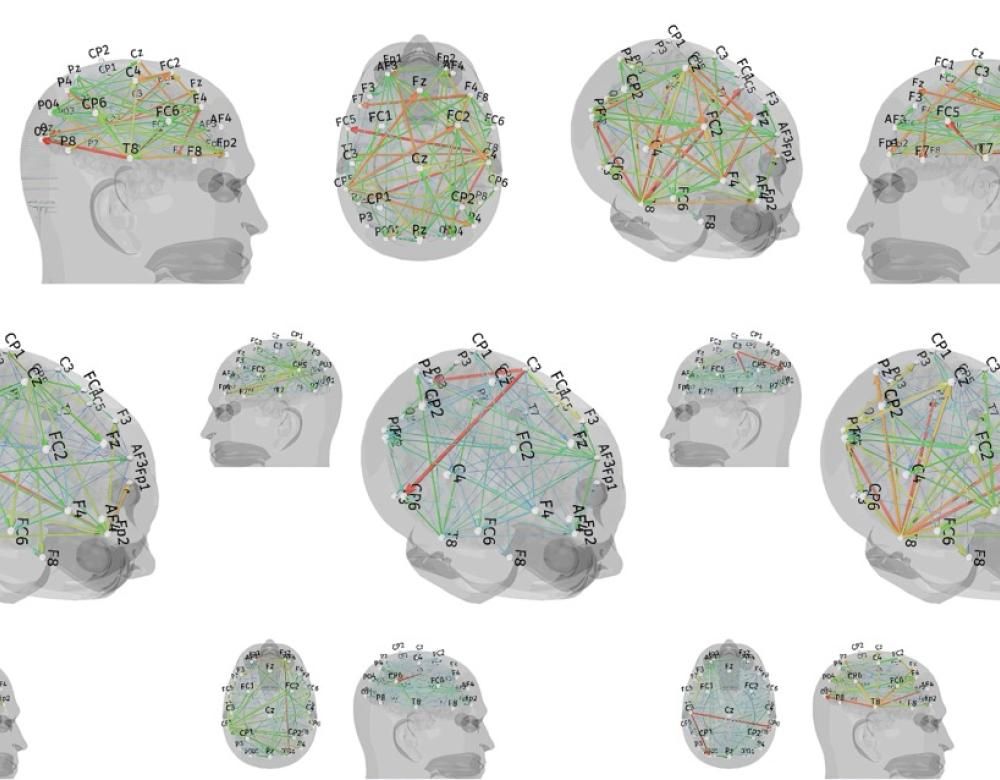
The impact of AI came into sharp focus in the summer of 2025, when an unpublished exploratory study from the Massachusetts Institute of Technology was shared online. The researchers measured brain activity in 54 volunteers as they completed writing tasks, both with and without ChatGPT, and found that ChatGPT users “consistently underperformed at neural, linguistic and behavioural levels”. In other words, the more a task is delegated to AI, the less the corresponding cognitive skills are exercised. Although the study was widely misrepresented, the authors emphasised the need for further investigation of AI’s role in education.
Is the world becoming more stupid?
In the 20th century, average IQ scores in industrialised countries rose, thanks to improved access to healthcare, education and nutritious food. This phenomenon, widely accepted by scientists, is known as the “Flynn Effect”. Since the 2010s, however, several studies have reported declining IQs in some countries, a trend dubbed the “Reverse Flynn Effect”, which has attracted considerable attention. Is this moral panic, or are IQs truly falling? The truth is that we lack sufficient perspective to interpret these data fully. While France has not shown this decline, IQs in other developed nations appear to have plateaued, possibly reflecting the limits of human intelligence.

Critical thinking and intelligence
Unlike intelligence, which has a clear scientific definition, critical thinking is a trickier concept to pin down. It revolves around three key components: skills, attitudes and knowledge.
Developmental psychology studies indicate that cognitive inhibition — the ability to suppress automatic mental processes — plays a key role in critical thinking. Faced with a task, our brain prefers to save energy, using quick mental shortcuts called heuristics. These heuristics are helpful in everyday life, but they can sometimes trick us and need to be inhibited in favour of slower, more demanding reasoning. A high IQ can help us think critically, but it does not mean we will use that skill all the time, or in every area of life. High intelligence does not shield individuals from poor decisions, reasoning errors or even conspiratorial beliefs. However, we can train ourselves to think critically throughout life and develop mental attitudes such as curiosity, self-reflection and open-mindedness.
The ‘g-factor’ and the IQ score we derive from it are still the most reliable measures of what psychologists call 'general intelligence’. But scientists also agree that this score, taken on its own, does not tell the whole story. This is because psychometric tests cannot capture the full complexity of a person, their genetics, environment, personality and individual life experiences.