Menopause: shattering the silence
Long confined to the private sphere, menopause is now emerging as a major public-health issue. As old stigmas crumble, science and medicine are shedding new light on long-ignored questions. Here, we explore how society is finally bringing this biological and social transition into the open.
An investigation by Agnès Vernet and Barbara Vignaux - Published on
Taboo… or turning point?
Is menopause the ultimate taboo? For many years, it was rarely discussed in public. Now firmly in the mainstream, the subject is debated in Parliament, emblazoned across bus shelters and splashed across magazine covers. A French parliamentary report published in April 2025, directed by MP and Health Minister Stéphanie Rist, even described menopause as “an opportunity” for the country’s 17.2 million women aged over 45 who are peri- or post-menopausal — a full quarter of the population! This “opportunity’ marks the end of menstrual periods and the start of a fresh chapter in women’s lives, both in terms of their health and in their lifestyle and relationships.
In clinical terms, menopause is a straightforward biological transition: twelve consecutive months without menstruation (amenorrhea), typically occurring between the ages of 45 and 55, at an average age of 51 in France. Yet menopause is far from a one-size-fits-all experience. The parliamentary report proposes 25 actionable measures to better support women through the process, from awareness campaigns and tackling stereotypes to quantifying its economic cost, including days lost at work, and overhauling both initial and continuing medical training.
After all, the medical impact of menopause cannot be ignored. The 2025 parliamentary report underscored its significance, calling for menopause to be recognised as a “public health priority”. And the figures speak for themselves: some 80 per cent of women report at least one menopause-related symptom, with 20 to 25 per cent describing their symptoms as “severe” or “disabling”. Menopause can also increase the risk of cardiovascular disease, bone disorders and cognitive decline. Research spanning medicine, biology and sociology is shedding new light on its complex effects, paving the way for more targeted support.
Menopause: a life stage
Technically defined as the first 12 consecutive months without a menstrual period, menopause is anything but a uniform experience. Its timing and course vary with age, health and individual circumstances. It may occur naturally or be induced abruptly by medical interventions such as surgery, chemotherapy or certain hormone treatments.
A still-mysterious onset
There is still no biomarker or lab test that can reliably predict when menopause will begin. Genetics, however, appear to play a major role: the timing in a woman and her mother can be correlated by as much as 85%. Research has also mapped around 100 genetic variations that, when severe enough, trigger premature ovarian insufficiency (POI) or early menopause. The same genes regulate the timing of natural menopause, and many play a key role in repairing damaged DNA.
Early vs. late onset
In the absence of medical or surgical intervention, menopause typically occurs after the age of 45. It can also be induced by surgery, specifically ovary removal surgery, or brought on by cancer treatments, such as chemotherapy, endocrine therapy or radiotherapy. Menopause is considered "late-onset" after age 55 and "early" (or "early-onset") between ages 40 and 45. Menopause before the age of 40 is classified as "premature ovarian insufficiency" (POI), at which point it is considered pathological.
How many women?
In France, 17.2 million women aged 45 and over are currently in perimenopause or postmenopause — around half of all French women and a quarter of the total population. Globally, the World Health Organisation (WHO) projects that this figure will hit 1.2 billion by 2030. With average life expectancy now reaching 85, many women today spend more than a third of their lives post-menopause.
A three-phase process
Produced exclusively by the ovaries, oestrogen and progesterone are two of the body’s key reproductive hormones. During perimenopause, their levels fluctuate sharply before oestrogen falls substantially at menopause, followed by a decline in progesterone. Testosterone, meanwhile, decreases more gradually and steadily.
Perimenopause: Average age: 47 – Average duration: 4 years
Menstrual cycles become irregular, sometimes accompanied by symptoms that affect daily life, such as night sweats, hot flushes and weight gain, before complete cessation of ovarian function.
Menopause: Age 51 on average in France
Benchmark Definition (WHO, 1996): the permanent cessation of menstruation resulting from the loss of ovarian follicular activity, recognised to have occurred after 12 consecutive months of amenorrhea.
Postmenopause: Past age 51
Phase after menopause
Average age (years)
Psychological shift: relief or loss?
Endocrine changes during menopause affect neuronal metabolism, according to a 2021 US study, contributing to mood changes and disrupted sleep, alongside the life stresses some women experience during this period, such as separation or children leaving home. While common and uncomfortable, these symptoms are temporary. But could menopause have longer-term effects? Women are twice as likely as men to develop Alzheimer’s, and growing research points to perimenopause as an important window. The 2025 Canadian Can-Protect study found that severe perimenopausal symptoms correlate with a higher risk of subsequent cognitive decline. The culprit? Plunging oestrogen levels, which play a role in protecting neurons by clearing toxic proteins from the brain.
Diverse symptoms
87 % of surveyed women report at least one menopause-related symptom alongside the cessation of periods. 20 to 25 % experience severe symptoms that impact their quality of life*
* Data sourced from the ELISA study (Toulouse University Hospital, July–August 2020), which surveyed 5,000 women aged 50–65. Despite criticisms over its pharmaceutical funding (Theramex), it remains the most detailed study to date of menopausal symptoms.
Symptoms can last anywhere from a few months to more than a decade.
- 68% genitourinary issues: vaginal dryness, painful intercourse, frequent urge to urinate
- 59% hot flushes, night sweats
- 52% joint stiffness and pain, worse in the morning or after rest
- 61% disrupted sleep patterns
- 58% irritability, mood swings, brain fog, anxiety/depression, weight gain
- 48% hair growth changes, drop in libido
Silver lining
The end of periods can bring a profound sense of relief, particularly for those who have experienced painful cycles, heavy bleeding, hormonal migraines or restrictive, poorly tolerated forms of contraception. For the one in ten women living with endometriosis, menopause can offer a welcome reprieve from a highly painful, chronic inflammatory gynaecological condition.
Not an illness, but…
Menopause can increase certain health risks and bring others to light, with some symptoms acting as an early warning sign for serious medical conditions. Studies led by the University of Queensland in Australia have found that severe hot flushes and night sweats are associated with a 70 per cent higher risk of cardiovascular disease. Oestrogen also plays a protective role, helping regulate blood pressure and maintain bone density. The lower a woman’s oestrogen levels, the greater the risk.“All women face an increased cardiovascular risk after menopause, especially if it occurs early," explains Dr Manon Jouffroy, a vascular specialist at Versailles Hospital.
Yet cardiovascular disease accounts for “30.1 per cent of female deaths in France, seven times more than breast cancer — a stark contrast to public perceptions of health risks,” according to Santé Publique France, as cited in the April 2025 parliamentary report.
Osteoporosis affects one in three women over 50. Post-menopausal oestrogen loss can accelerate bone loss by up to 4 per cent a year, sharply increasing the risk of fragility fractures. In fact, 40 per cent of women aged 50 will experience an osteoporotic fracture in their lifetime — nearly three times the rate among men (14 per cent).
But for some women, the end of menstruation brings relief from severe cycle-related conditions, including endometriosis, which affects 10 per cent of women, adenomyosis (a form of endometriosis affecting the uterine wall), uterine fibroids and menstrual migraines. For those affected, it can mark a welcome turning point.
To take hormones or not: that is the question
In 2002, the US Women’s Health Initiative (WHI) study sent shockwaves through the medical community by linking Menopause Hormone Therapy (MHT) to heightened risks of breast cancer and cardiovascular disease. The findings contributed to a sharp decline in MHT use in France, from 50 per cent in the early 2000s to just 4.4 per cent in 2025. However, this study, while valuable, had important methodological limitations, including an unrepresentative sample, North American prescribing protocols that differed from those used in France and treatment initiated later than is now considered appropriate. So where do we stand on MHT today?
In the short term, MHT cuts ‘climacteric syndrome’ — hot flushes, night sweats, insomnia, mood swings — by an average of 75 per cent. Long-term benefits are equally striking: a 30 to 40 per cent drop in osteoporosis fractures and a 30 per cent reduction in overall mortality when initiated early.
These benefits depend on several conditions: starting treatment within ten years of menopause and before the age of 60, limiting duration to seven years and using natural progesterone — the standard approach in France — rather than synthetic progestogens. Outside these parameters, the balance of benefits and risks may change, with potential risks including heart attack, stroke, breast cancer and meningioma.
Findings from the French E3N cohort (Inserm/Gustave-Roussy), which has followed 100,000 women since 1990, point to an increased risk of ovarian and endometrial cancers with MHT. Although less common, these cancers can have poorer prognoses. Recognising the therapeutic merit of MHT, the French National Authority for Health recommends the use of MHT "when women experience severe distress", provided that "clear, tailored information is given to patients". It recommends "the shortest possible treatment duration, re-evaluated at least annually." In France, women use MHT for an average of 5.1 years.
Testosterone to get your libido back?
While menopause brings sexual relief to some women, 40 per cent experience reduced desire or physical discomfort. Beyond topical oestrogen and lubricants, a growing wellness trend is promoting testosterone as a treatment, with influencers touting it as a cure-all for brain fog and exhaustion. The hype is fuelling a market expected to be worth $7.3 billion by 2030. Still, a note of caution is warranted: while tailored doses measurably boost libido, broader claims remain unproven. Testosterone therapy may also carry cardiovascular risks.
Since 2025: a new era of care
Like pregnancy, menopause is a natural biological phenomenon — one that can nevertheless require medical support when symptoms become severe or health risks escalate. France is now developing dedicated, multidisciplinary menopause clinics to meet that need. At the start of 2025, Toulouse University Hospital was the only public institution with a dedicated centre. Since then, Bordeaux University Hospital has opened an expert centre, while Lyon has introduced a specialised clinical pathway. In Paris, AP-HP offers specialised consultations. Since 1st April 2026, women aged 45 to 65 can also benefit from a free ‘menopause consultation’. The measure brings France closer to countries such as Belgium, the UK, Canada and Australia, where menopause has been incorporated into public healthcare.
Sick of medication?
Thermal spas, massages, dietary supplements — the non-medical menopause market is thriving, often driven by clear commercial interests. But what does the science say? Cognitive Behavioural Therapy (CBT) and hypnosis are clinically proven to reduce the severity of hot flushes, although they do not appear to reduce their frequency. A healthy lifestyle combined with regular exercise such as core workouts, Pilates or running can help limit weight gain and reduce the risk of cardiovascular disease, cancer and osteoporosis. Other approaches, including sophrology and acupuncture, may enhance well-being, although scientific evidence of their effectiveness remains limited.
And in the workplace?
Menopause remains taboo in the workplace. A 2023 study by Kantar, MGEN and the Fondation des Femmes found that a third of the French population finds it difficult to talk about, while 53 per cent feel anxious about raising the subject. An earlier survey found that only half of women living with a partner had ever discussed menopause with them. This is hardly surprising: society’s attitudes towards menopause are shaped by centuries of cultural norms and gender relations. For women, ageing still carries a social penalty, compounded by the persistent belief that productivity declines after 50.
According to sociologist Cécile Charlap, menopause is still viewed as a departure from the fertile norm, rather than simply a new hormonal phase.
Fearful of being seen as past their prime at work, women often conceal their symptoms, sometimes cutting back on their working hours as a result, according to a June 2023 report by the Senate Delegation for Women’s Rights. The report also highlights the heavy toll on physically demanding jobs, particularly in healthcare and cleaning, where symptoms such as joint pain can be especially debilitating.
Gradually, however, attitudes are shifting, starting with the formal recognition of the very real physical impact of menopause. While stopping short of recommending dedicated ‘menopause leave’, the 2025 parliamentary report calls for its impact on women in the workplace to be measured, employers to receive appropriate training and menopause awareness to be integrated into occupational health services. In the workplace, corporate initiatives are gaining traction, from awareness programmes at Schneider Electric and Sanofi to flexible working arrangements and remote-work options at BNP Paribas.
What about men?
In men, andropause causes a gradual series of changes:
- Testosterone deficiency
- Onset around age 40–45, continuing through later life
- Symptoms specifically occur in men with abnormally low testosterone levels — a rare condition that can cause symptoms similar to menopause, including lower libido, loss of muscle mass, mood changes and erectile dysfunction.
In women, menopause rapidly leads to: - The end of fertility and hormone production (oestrogen and progesterone)
- Typically occurring between ages 45 and 55
- A wide range of symptoms
Women still describe menopause as a source of profound social invisibility, even as it becomes increasingly visible in public discourse.”
Cécile Charlap, sociologist, researcher and senior lecturer at Toulouse-Jean Jaurès University
Age of decline?
Social death. Such was the bleak reality of menopause when French doctor Charles de Gardanne coined the term in 1821. Menstrual blood was believed to be toxic, its retention blamed for a catalogue of ills, from fever and eye inflammation to ulcers and cancer. Seen as ‘venomous’ and a danger to herself and those around her, a menopausal woman might be subjected to bloodletting or leeching. Deprived of her reproductive function, she was also seen as losing her place in society. With the rise of psychiatry, menopause was framed as a trigger for mental illness, kleptomania and hypersexuality. Although medical thinking has since changed, this narrative of ‘inevitable decline’ has proved remarkably resistant.
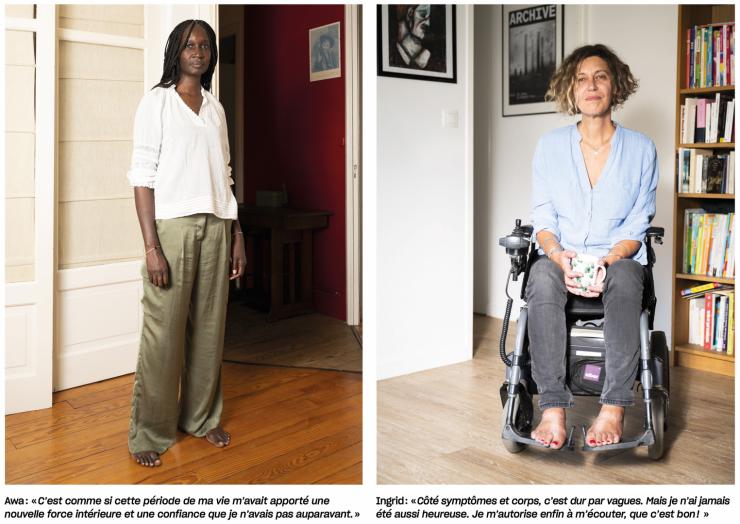
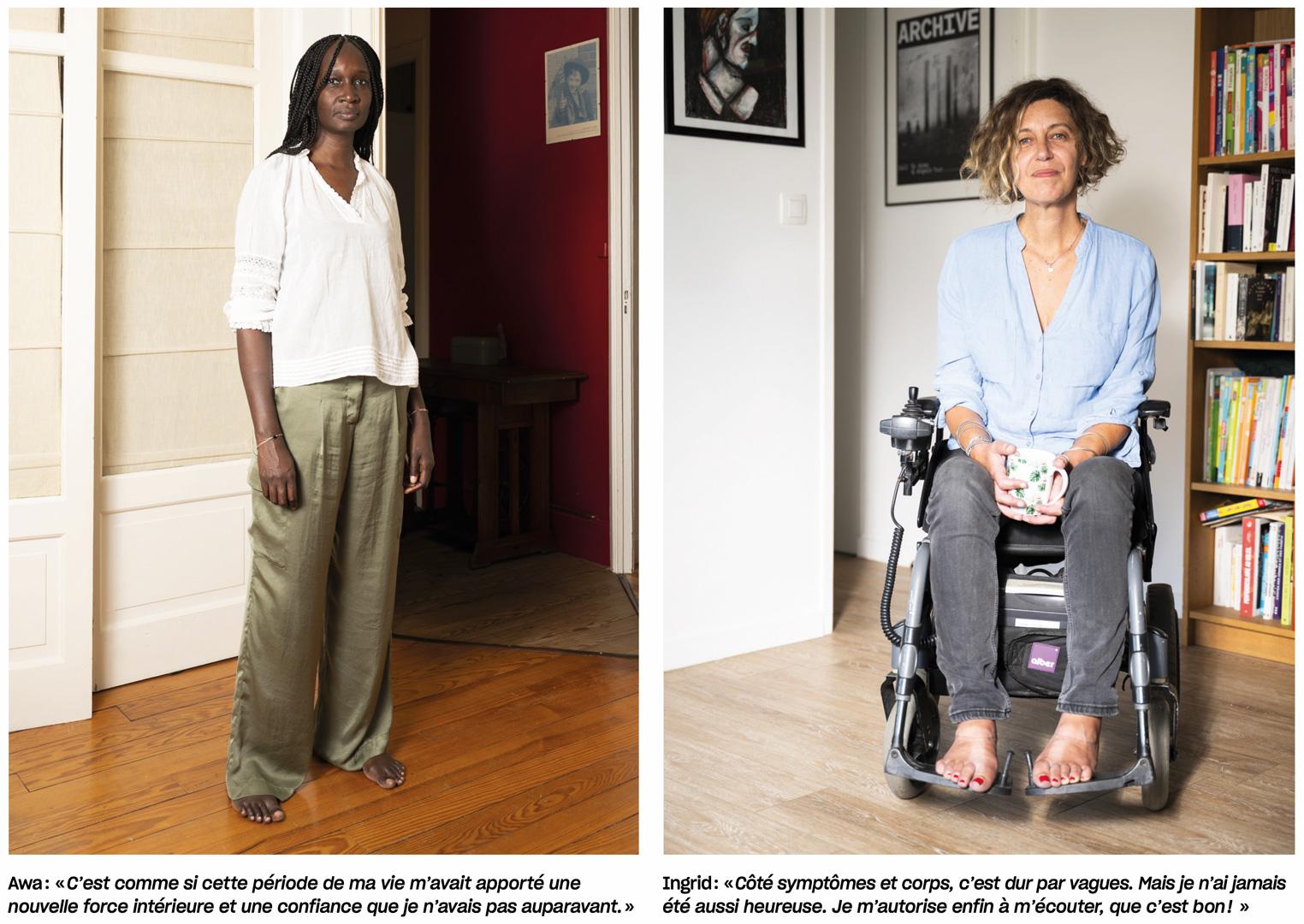
« Let's show off!»
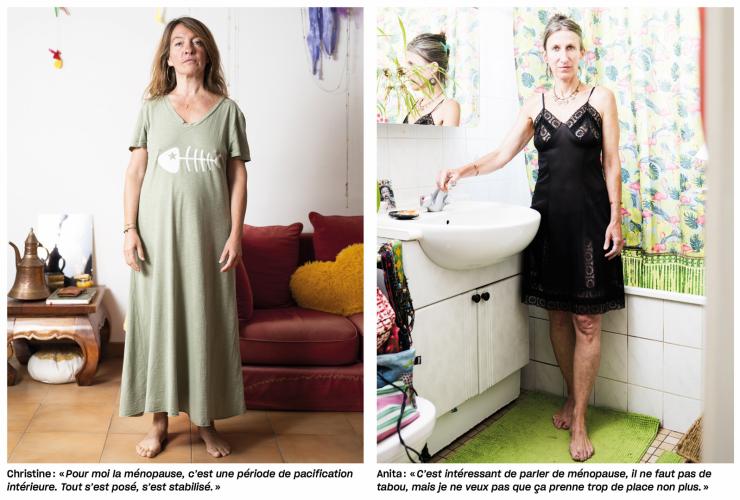
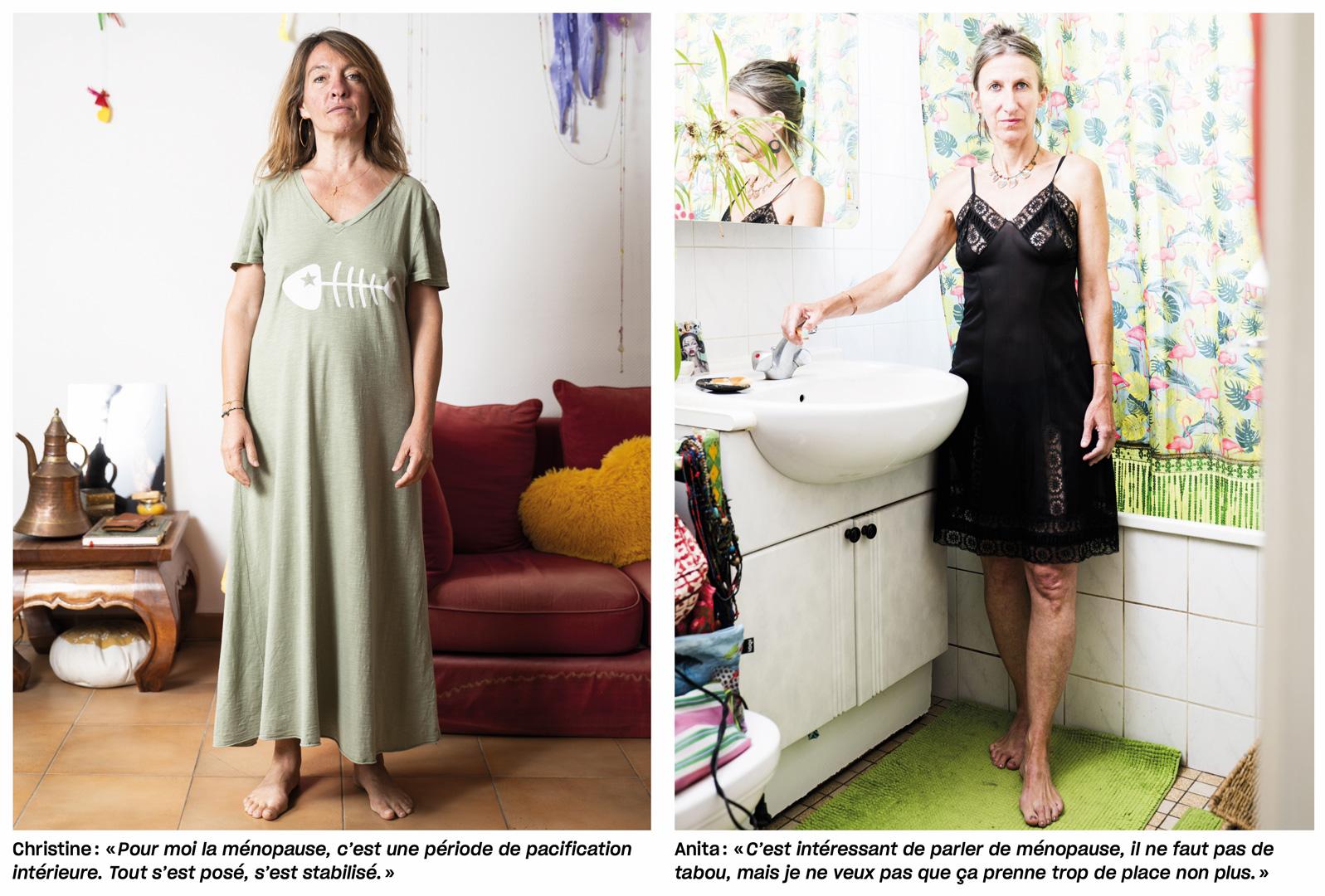
In 2025, photographer Caroline Fabre presented ‘Nous afficher !’, a documentary project with a strong political dimension that challenges the silence surrounding menopause. Struck by the changes in her own body and society’s silence around them, the artist sought out 20 women and photographed them in their homes, creating raw, intimate portraits.






True or false?
No, but…
Weight gain is certainly common. Half of menopausal women in Europe gain an average of 2 to 3 kg, and sometimes more. The reasons? A combination of hormonal shifts and ageing: after 50, metabolism naturally shifts towards greater fat accumulation and reduced muscle mass.
True!
It is the body's internal thermostat that goes awry, rather than the body actually overheating. The hypothalamus, a region of the brain, mistakenly detects an increase in body temperature and activates the body’s cooling mechanism, notably sweating and the dilation of blood vessels.
Take that with a pinch of salt…
In tablet or capsule form, soy-based dietary supplements contain phytoestrogens that may compensate for the decline in ovarian oestrogen. Caution is warranted, however: their dosage is not always clearly defined, and they have not been subject to clinical studies on their long-term use. They are also contraindicated for women with a history of hormone-dependent cancer, particularly breast cancer.
Not necessarily!
Fezolinetant promised a non-hormonal breakthrough, targeting the brain's hypothalamus to reduce both the frequency and intensity of hot flushes. Approved in the US in 2023, in several European countries and in France in April 2025, where it remains unreimbursed, the drug carries a serious caveat: concerns over the risk of liver damage prompted France’s National Agency for the Safety of Medicines and Health Products (ANSM) to issue urgent warning letters to doctors and pharmacists in May 2025.
False!
More than a hundred scientific studies show that combining high-impact movement exercises, like running or jumping, with resistance training can reduce fracture risk in postmenopausal women. The catch? The benefits depend on regular, sustained effort.
False!
Smoking is associated with menopause occurring one to two years earlier, and heavy smoking (over 20 packs per year) can increase the likelihood of premature menopause. Smokers may also experience more severe hot flushes.
True!
Often overlooked, joint pain is in fact a common clinical symptom of menopause. It can affect hands, feet, wrists and ankles, with discomfort fluctuating throughout the day and often peaking first thing in the morning or after periods of rest.
Sources
- Le traitement hormonal de la ménopause augmente le risque de cancer du sein, vraiment ? Inserm, avril 2026
- La ménopause en France. 25 propositions pour enfin trouver le chemin de l’action.Rapport parlementaire, Stéphanie Rist, députée du Loiret, avril 2025
- Les traitements hormonaux de la ménopause, Inca, septembre 2024
- “Menopause-Biology, consequences, supportive care, and therapeutic options”, Susan R. Davis, JoAnn Pinkerton et al., Cell, 14 septembre 2023
- « Effets de l’activité physique et de la diminution des comportements sédentaires chez la femme ménopausée ». Recommandations pour la pratique clinique, Gynécologie Obstétrique Fertilité & Sénologie, mai 2021
- “Risk of breast cancer after stopping menopausal hormone therapy in the E3N cohort”, Agnès Fournier, Sylvie Mesrine et al., Breast Cancer Res Treat., 2014
- Des risques différents de cancer de l’ovaire selon le THM, E3N Générations, juin 2023
- Idées reçues sur la ménopause. Une problématique médicale et sociale, Cécile Charlap (Cavalier bleu, 2026)
- Nouvelles fertilités, nouvelles familles, nouvelle humanité ?, Micheline Misrahi-Abadou, Boris Cyrulnik (sous la direction de) (Odile Jacob, 2024)

