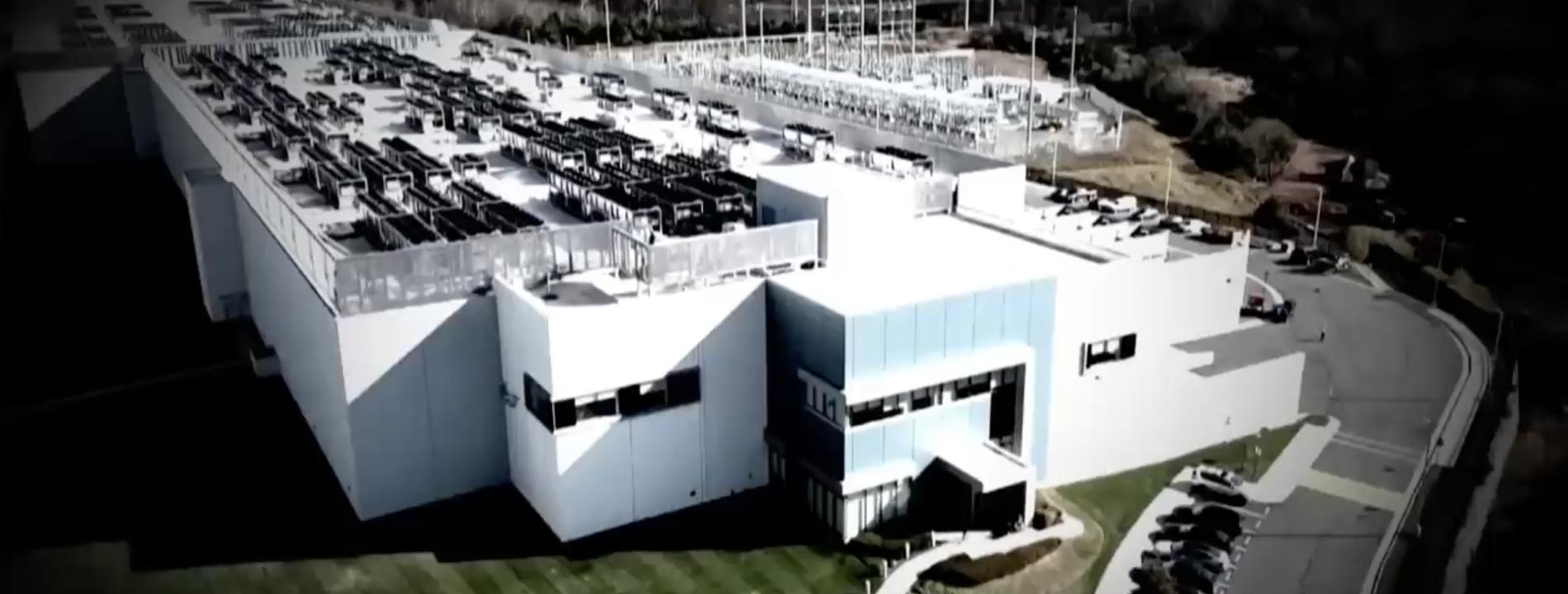
The great data center rush
France is diving headfirst into the AI race with a fresh wave of dedicated data centres. As facilities grow larger and more powerful, so do the technical, social and environmental challenges they pose.
An investigation by Pierre-Yves Bocquet . Infographics : Julien Tredan-Turini - Published on
France enters the global AI race
Initially driven by GAFAM (Google, Apple, Facebook, Amazon, Microsoft) and AI trailblazers like OpenAI — the company behind ChatGPT — a massive artificial intelligence wave is now sweeping the globe, with no major power willing to miss the boat on the ‘next industrial revolution’. The result? Investment is flooding in, with France committing €109 billion over the next five years, including €10 billion in Cambrai (Nord), €2.3 billion in Marseille and another €2.3 billion in Dugny (Seine-Saint-Denis).
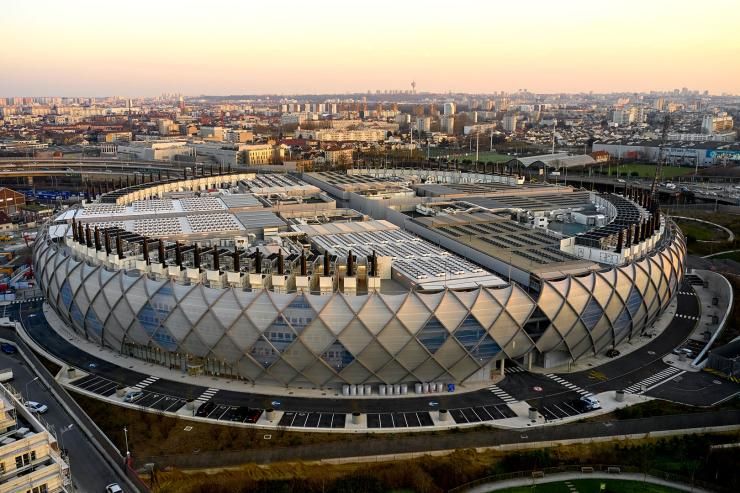
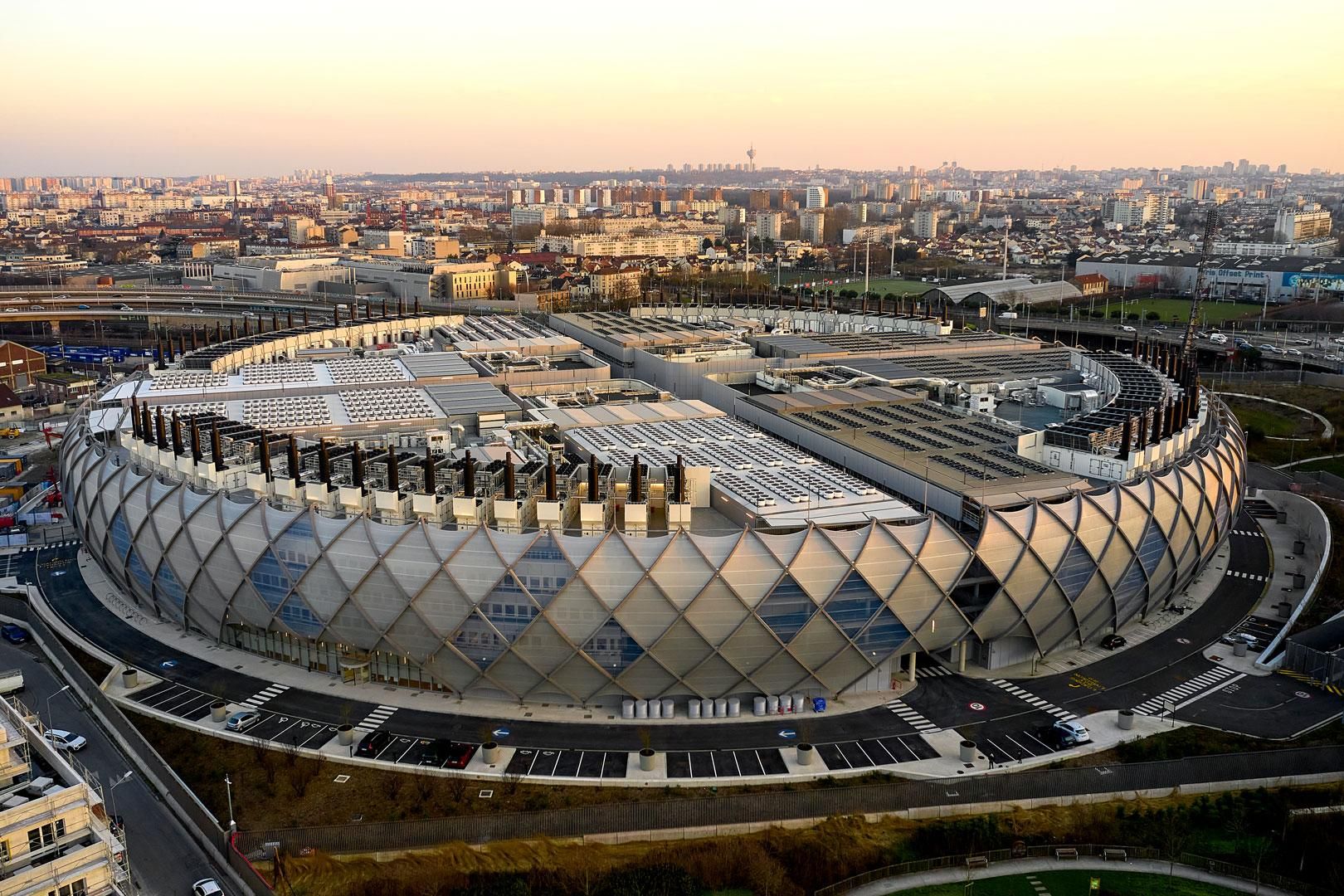
These colossal sums will build the backbone of AI’s infrastructure, including the data centres needed to store the vast amounts of data that artificial intelligence systems need to train and operate.
In 2025 alone, data centres swallowed up a staggering 42% of all investment in France — and this is just the beginning.
Bigger and far more powerful than traditional web-hosting facilities, these next-generation data centres could become as transformative and strategic for the economy as the steam engine, the internal combustion engine and computing before them. Worth ‘several billion dollars’, the deal struck in July 2026 between French startup Mistral AI and US giant Microsoft shows just how fast this trend is taking off on home turf, with Mistral AI now building out its own compute capacity in France and Sweden, and renting it to third parties, starting with Microsoft. This move is designed to expand its model portfolio, locking in a footprint across the entire AI value chain. Yet this massive shift towards digital brings major stakes to the fore: shifting job markets, powering the sector's energy needs, managing environmental fallout and securing independence from US tech solutions.
Mega-scale ambitions
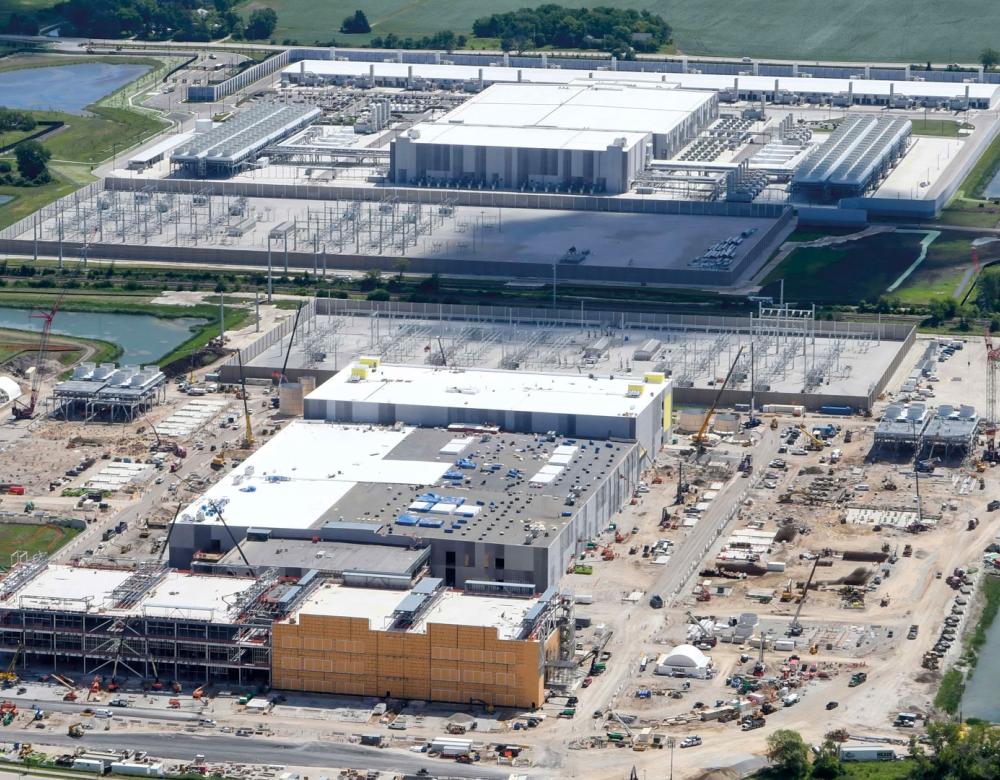
The latest generation of data centres is undergoing a massive power upgrade to meet the computing capacity and storage demands of artificial intelligence. Where top-tier facilities used to draw a few hundred megawatts, these ‘XXL’ campuses are breaking the gigawatt barrier. Meta’s Louisiana site is set to hit 2 GW by 2029, while Microsoft’s Fairwater facility — unveiled in late 2025 — is projected to top 3 GW over time. Now France is following suit, with the AI Campus backed by Mistral AI, Bpifrance and Nvidia aiming to reach 1.4 GW in Seine-et-Marne by 2030.
France scales up
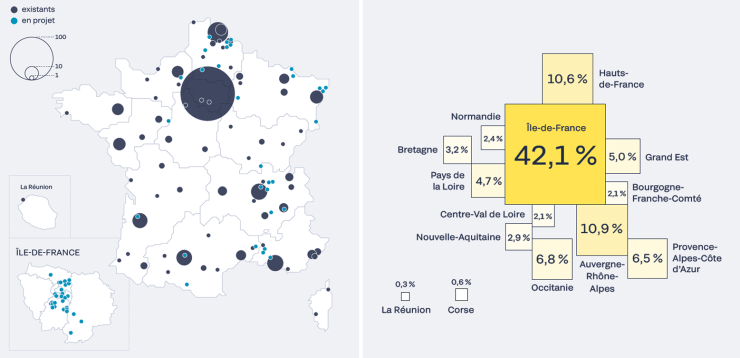
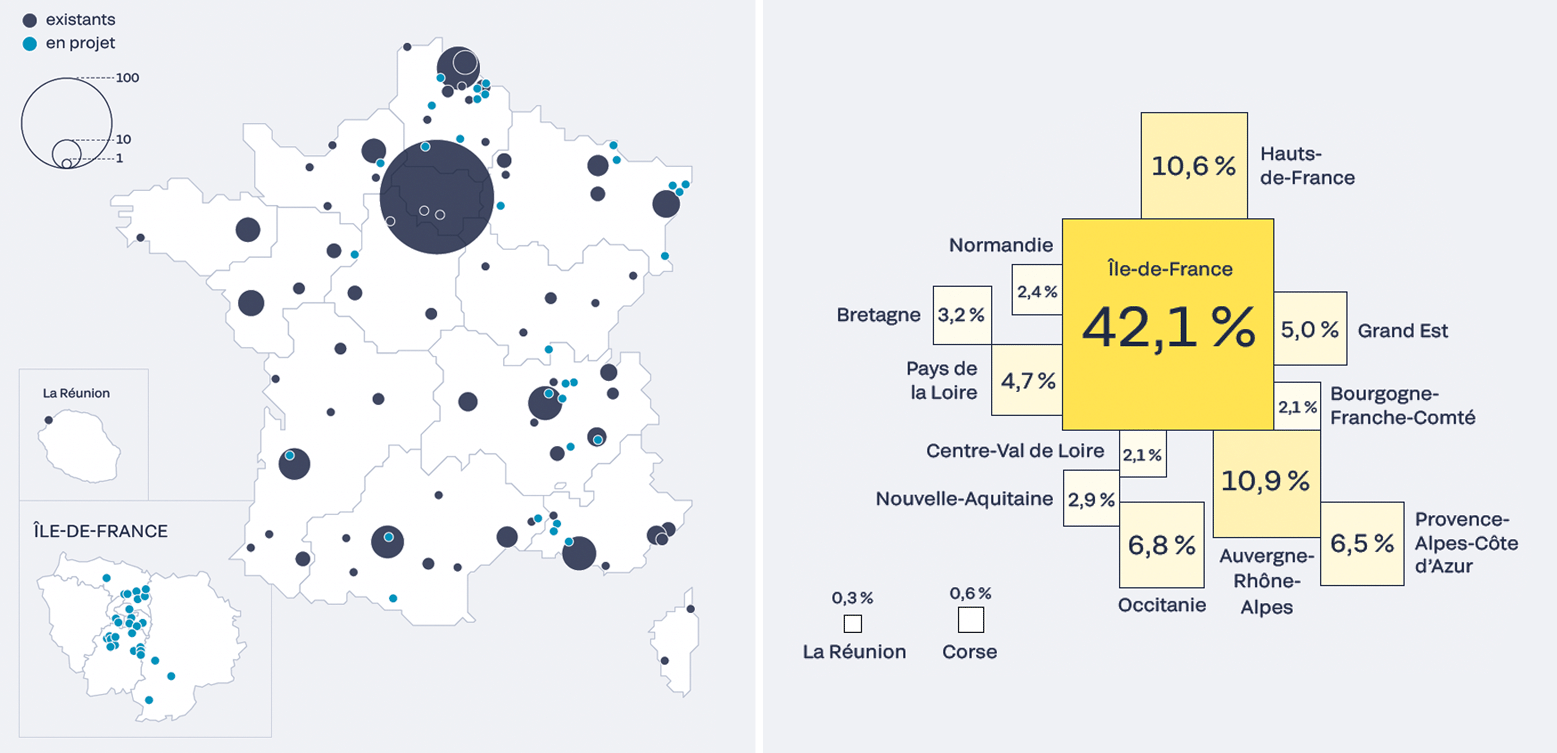
Pro-investment policy, booming industrial demand and strong geographic and technical fundamentals have triggered a wave of data centre developments across France.
Structural advantages
France holds several key competitive edges for hosting data centres:
• A dense network of top-tier computer science universities and institutes
• Industrial shovel-ready brownfields — particularly in Île-de-France and Hauts-de-France — offering lower site costs and tax incentives
• Global connectivity: France is hooked into 29 high-speed subsea fibre cables (with five more under construction), ensuring low-latency data transit across borders
• A steady, overwhelmingly low-carbon power supply, 95% carbon-free in 2025, leaving a massive 92-terawatt-hour surplus (20% of total output). Driven by nuclear, alongside hydro, wind and solar, this energy mix easily meets data centres' skyrocketing power demands.
Sovereignty at stake
Nearly 80% of French data currently relies on US-based storage infrastructure. What if cloud giants like Google, Microsoft or Amazon decided to block access to their data centres? Recent events suggest this is more than a hypothetical scenario: in June 2026, US President Donald Trump asked American AI company Anthropic, the developer of Claude, to block foreign entities from accessing certain versions of its AI models.
Yet guaranteeing true independence will require going far beyond simply building data centres at home. After all, US law allows federal agencies like the CIA to compel American cloud providers to hand over data, even if it is stored on foreign soil.
In the second half of 2025 alone, Amazon received 444 such requests, Microsoft 5,587 and Google 60,000, according to a July 2026 report by the French parliamentary committee examining “structural dependencies and systemic vulnerabilities in the digital sector, and the risks they pose to France’s independence”.
For France to beef up its digital sovereignty, it will also need home-grown and European players in the data hosting market, such as Mistral AI.
Herein lies the paradox: in seeking to build a European alternative to the US tech giants, the French company has ended up strengthening its ties with one of them, through the deal struck with Microsoft in July 2026.
Finally, the data management software market remains overwhelmingly dominated by US firms like Microsoft and Oracle — yet another hurdle for European digital sovereignty.
Nvidia or bust?
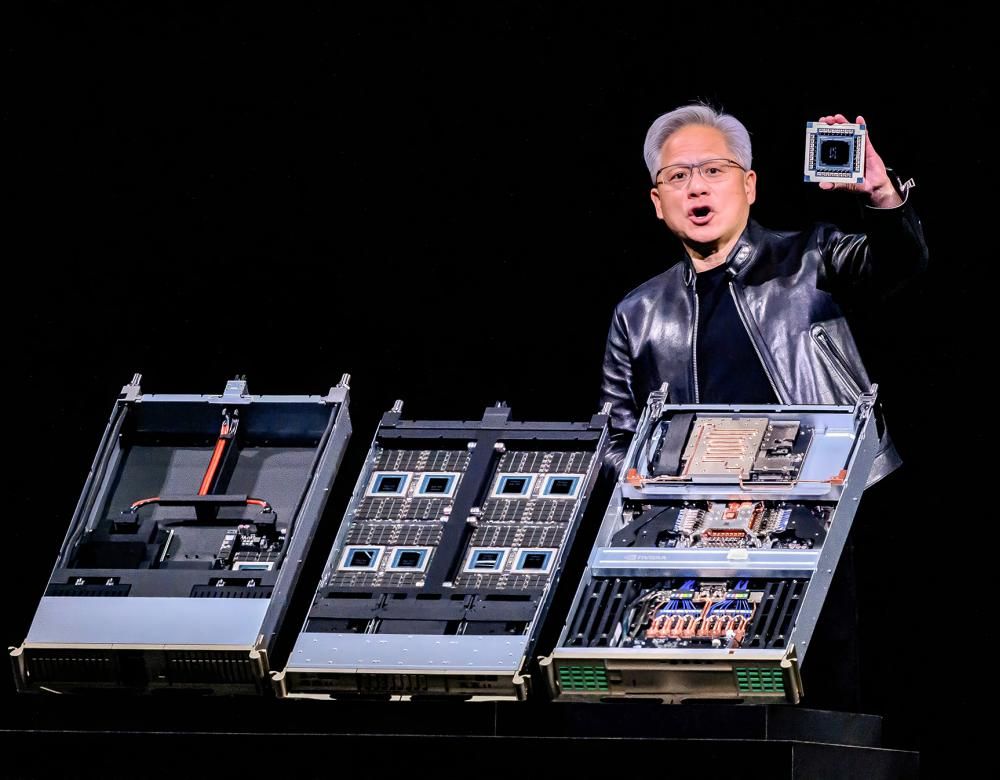
At the core of data centre servers sit graphics processing units (GPUs) from US tech giant Nvidia. Originally built for video game graphics, they have become the global gold standard for running AI models, propelling the California company to the highest market capitalisation in history, ahead of Apple and Alphabet, in October 2025. That near-monopoly position (rival AMD trails far behind) raises burning questions about supply chains and national sovereignty: what good does it do France to build domestic data centres if they run almost entirely on US-designed chips manufactured in Taiwan?
Cooling crunch
It’s a hard-and-fast law of physics: run a current through any electronic component, and it gets hot. That leaves operators with a hard choice. They can either cool data centres down or watch them overheat. To keep them running, the industry relies on two main approaches, often paired together: fan-driven air cooling or water-based systems that chill the surrounding air through evaporation. But the water footprint is staggering. The World Economic Forum estimates that a single 1-megawatt facility can gulp down up to 25.5 million litres of water a year — enough to supply a 300,000 inhabitants city like Montpellier for an entire day.
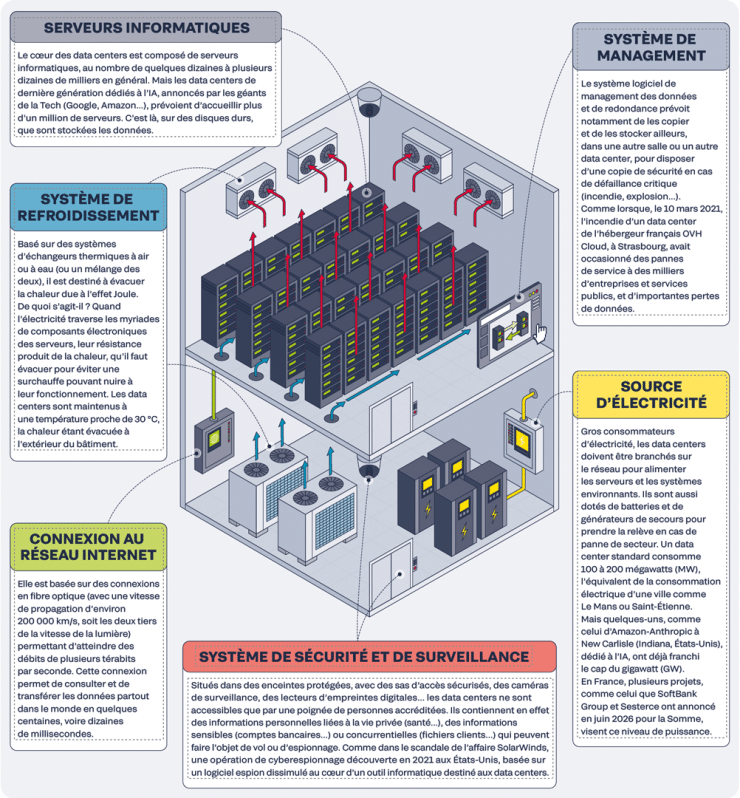
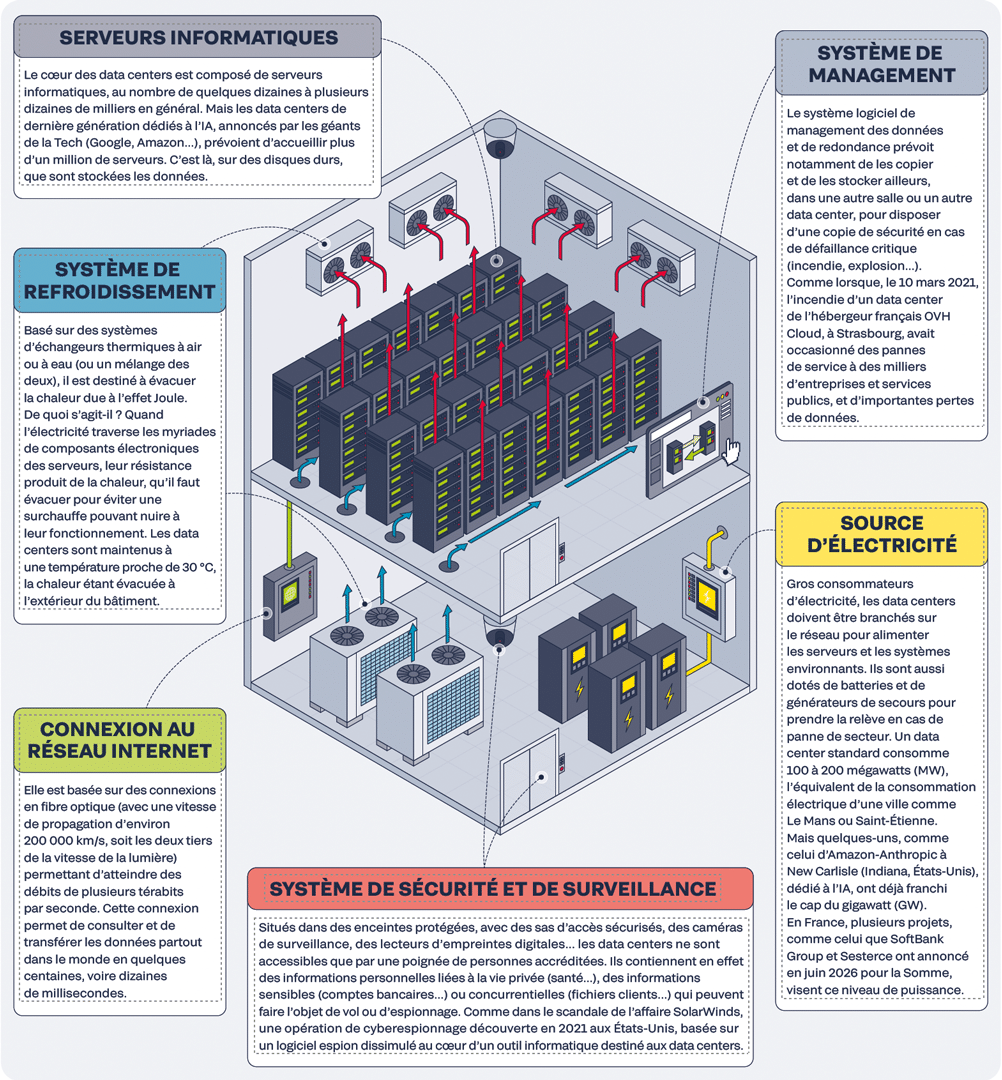
Anatomy of a data centre
IT SERVERS
The backbone of any data centre is its server fleet, ranging from a few dozen machines to tens of thousands. But next-gen AI facilities announced by tech giants like Google and Amazon are built to house over a million. It’s here, on massive banks of hard drives, that data is stored.
COOLING SYSTEM
Built on air- or water-heat exchangers (or hybrid setups), these systems counter Joule heating — the thermal energy generated when current runs through millions of server components. Without constant cooling to clear this heat, systems risk critical thermal failure. Facilities are typically kept near 30°C (86°F), with waste heat vented outdoors.
INTERNET CONNECTIVITY
Connectivity relies on high-speed fibre-optic links (with propagation speeds around 200,000 km/s, about two-thirds the speed of light) to deliver multi-terabit-per-second throughput. This bandwidth lets users query and transfer data globally in a matter of tens or hundreds of milliseconds.
MANAGEMENT & REDUNDANCY
Specialised data management and redundancy software handles real-time operations and data mirroring, backing up files to separate rooms or secondary facilities to protect against critical failures like fires or explosions. The risk is real: a March 2021 fire at French cloud provider OVHcloud’s Strasbourg site knocked thousands of businesses and public services offline, causing massive data loss.
SECURITY & SURVEILLANCE
Housed inside fortified perimeters with secured airlocks, CCTV and biometric scanners, data centres are off-limits to all but a handful of vetted staff. After all, they store private personal data like health records, sensitive financial details such as bank accounts and commercially critical assets like client files, making them prime targets for theft and corporate espionage. This was vividly illustrated during the 2021 SolarWinds scandal, where hackers slipped spyware into data centre software to pull off a massive cyber-espionage campaign across the US.
POWER SUPPLY
As power hogs, data centres require direct high-voltage grid connections to keep their servers and supporting infrastructure running, alongside massive battery banks and diesel backup generators for outages. A standard facility draws 100 to 200 megawatts (MW), roughly the usage of a mid-sized city like Le Mans or Saint-Étienne. But AI mega-sites, like the Amazon-Anthropic complex in New Carlisle, Indiana, have already broken the 1-gigawatt (GW) threshold. In France, projects like the SoftBank-Sesterce facility announced in June 2026 for the Somme region are aiming for the same scale.
In France, data centres accounted for just 0.02% of all commercial water use in 2023, according to telecoms regulator Arcep. But with a wave of new facilities in the pipeline, that figure is poised to climb sharply, just as climate pressures and water scarcity intensify. To head off the crunch, a range of new solutions is hitting the industry. Some are still on the drawing board, while others are already deployed on the ground, including recycling water in closed loops to curb intake; building data centres in cold regions — or sinking them into rivers and seas — for natural cooling; and tapping their waste heat to warm nearby buildings or power industrial plants. French data centre operator Data4 and Paris-Saclay University plan to harness this waste heat to capture carbon dioxide from the air and use it to cultivate algae, which will then be turned into bioproducts and bioenergy.
Grid strain
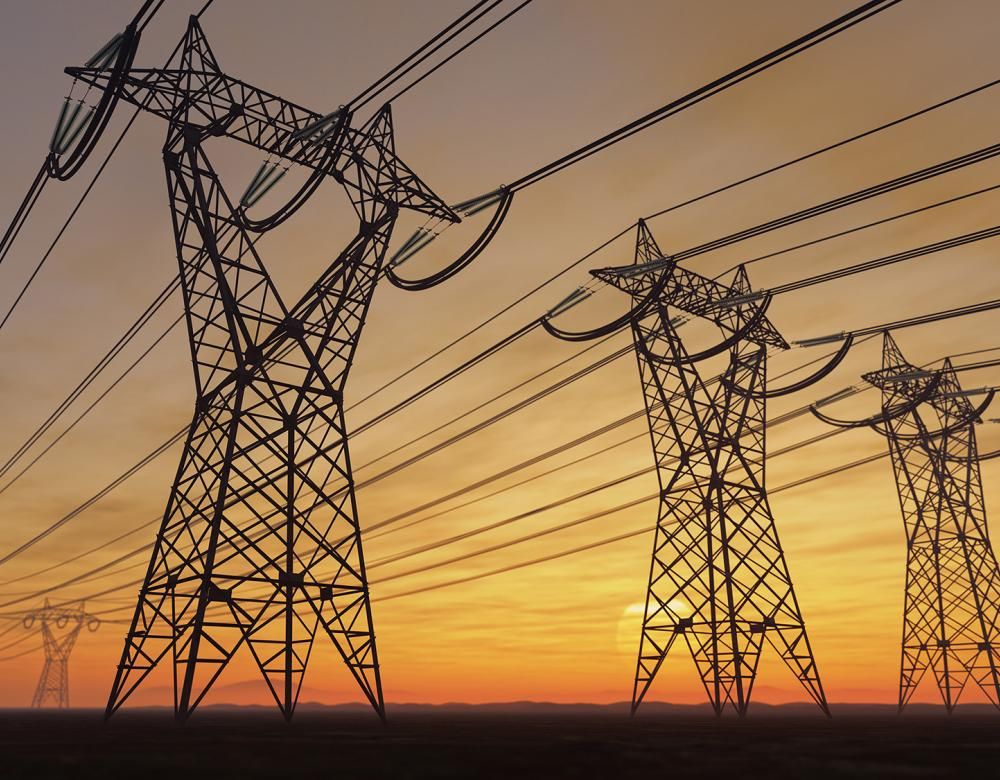
Plugging into the power grid remains one of the industry's biggest bottlenecks in France because of bureaucratic red tape. Waiting times can drag out for up to seven years — a delay that risks scaring off investors and driving projects overseas, as a French Senate report warned in early 2026. However, under a red-tape reduction law passed in May 2026, certain data centres can now be designated as "Projects of Major National Interest", granting them fast-tracked approvals.
Brownfields reborn
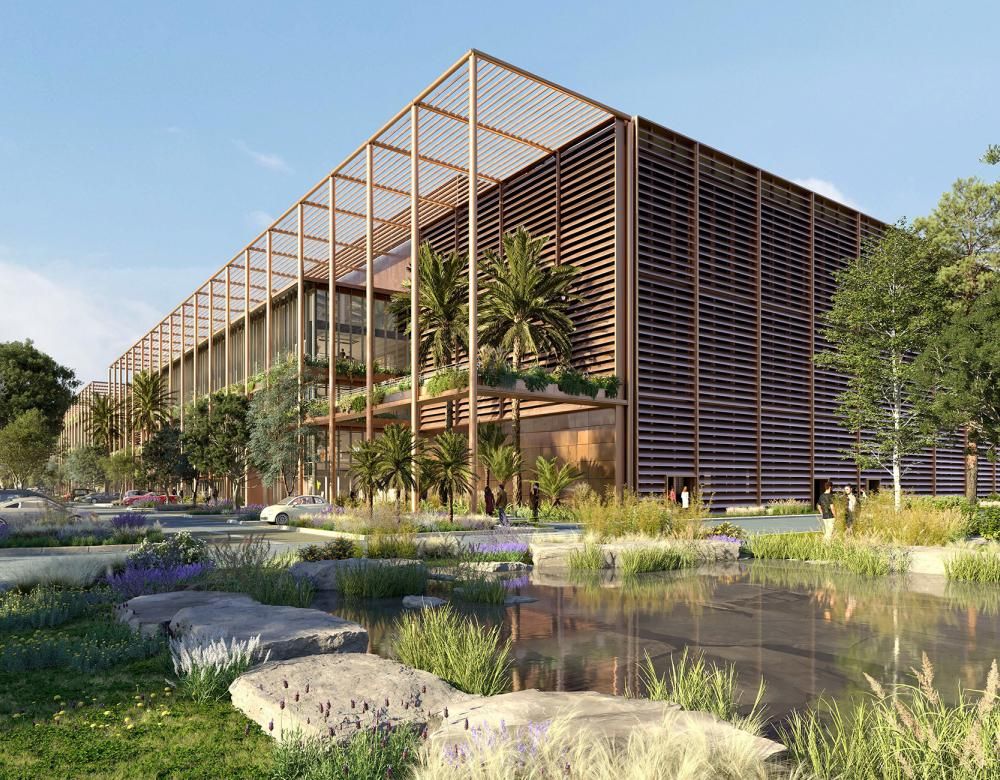
Former industrial brownfields are quickly becoming prime real estate for data centre developers. Construction began in late 2025 on a new facility built by French firm SNC Data Hills on the site of a former PSA auto plant in Aulnay-sous-Bois, which closed in 2014. Meanwhile, Canadian fund Brookfield and Data4 unveiled a €10 billion project in June 2026 on the former Usinor steelworks site in Escaudain (Nord). For developers, these blighted locations bring crucial benefits, including vast, inexpensive acreage, ready-made grid connections, tax breaks and easier community buy-in.
Job opportunities?
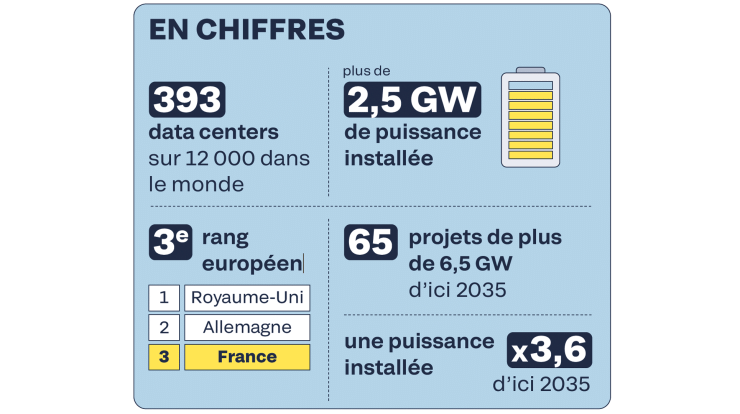
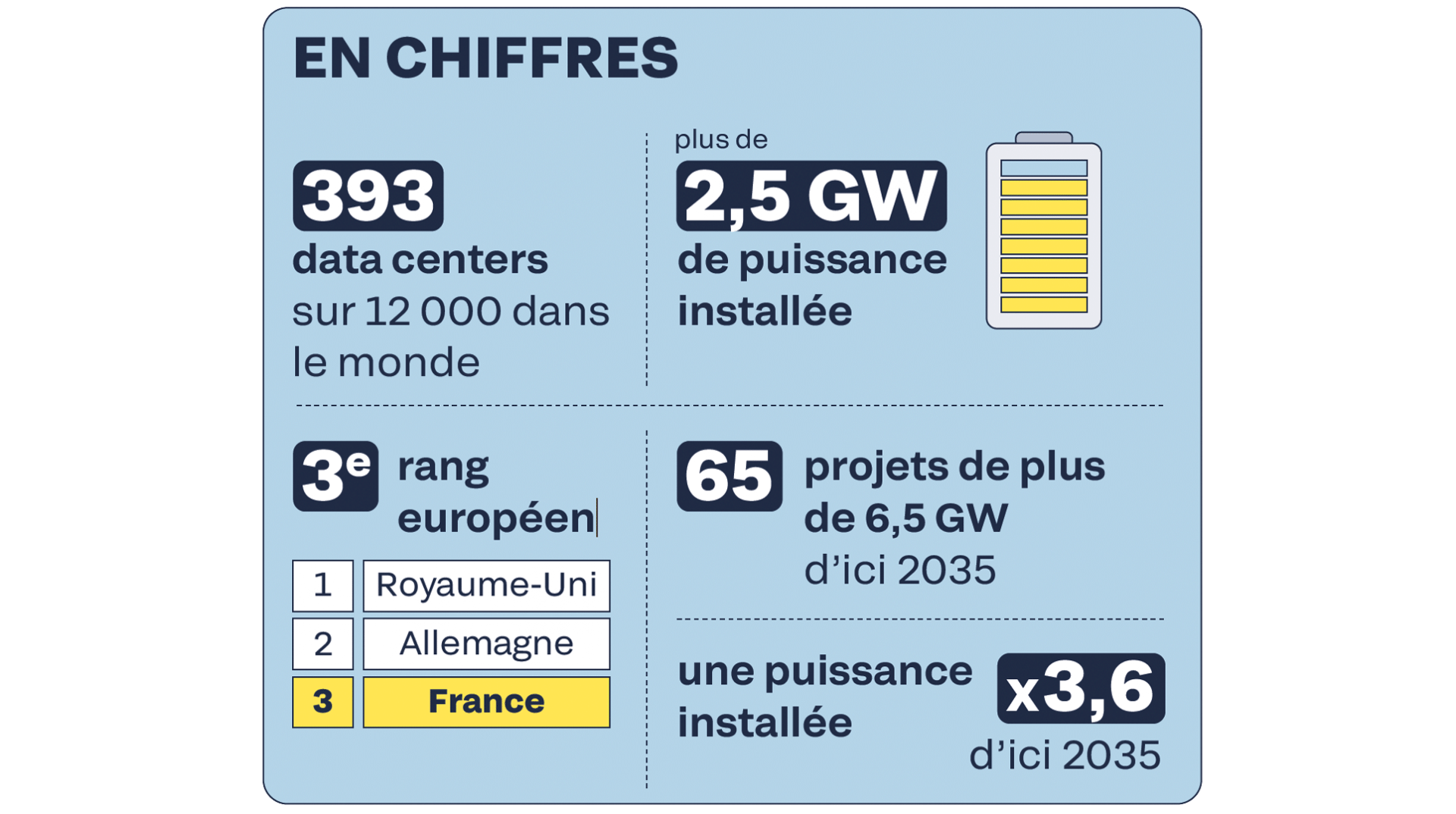
France’s 300 operational data centres generated nearly 50,000 direct and indirect jobs in 2025, according to a French Senate report. That number has now climbed to 393, with a pipeline of new projects set to boost hiring even further. Beyond purely IT roles, data centres are recruiting across fluid management and HVAC engineering (to keep facilities cool), as well as physical security.
Hard data on exact numbers remains elusive.
Workforce shortages pose an immediate risk. The Senate report also notes that construction projects in France are already running up against a "widespread shortage of skilled labour, both in-house (technicians, engineers, project managers) and across contractors (electricians, HVAC specialists, construction workers)".
Yet those figures blur an important distinction between the temporary jobs created during construction and grid connection — lasting anywhere from a few months to a couple of years — and the permanent roles required to run and maintain the facilities for the long haul. According to the 2025 EY – France Datacenter Barometer, these short-term roles accounted for nearly a third of all jobs in 2024.
The gap between developers' rosy projections and reality on the ground is often vast, leaving final hiring numbers well short of expectations, especially given the capital injected. Economic research observatory Trendeo estimates that for every €24 million invested in data centres, just a single job is created. According to a May 2024 study by the same firm, standard industrial projects yield anywhere from 0.6 to 13 jobs per €1 million committed. Plainly put, standard industry is a far bigger job creator!
Grassroots resistance
Plans for new data centres are increasingly sparking fierce pushback on the ground. Critics point to a long list of grievances, including land grabs, the loss of prime farmland, massive drains on local power and water supplies at residents' expense, as well as visual clutter, noise pollution, environmental damage and threats to local biodiversity. The grievances are stacking up, nowhere more so than in the US, where the AI boom is charging full steam ahead. High-profile figures — from Alexandria Ocasio-Cortez, Democratic Congresswoman Representative for the Bronx and Queens, to environmental attorney and activist Erin Brockovich — are speaking out against building permits rubber-stamped on the back of flimsy environmental impact studies.
Elsewhere, from Dublin and Amsterdam to Singapore, authorities have slapped moratoriums on new data centre developments.
It’s a measure now being demanded in France by several advocacy groups, including La Quadrature du Net, a digital rights organisation. In the meantime, France’s National Public Debate Commission (CNDP) is opening the floor for discussion. In April 2026, it announced a public consultation for a project that would see Google build its first French data centre in Ozans, near Châteauroux, slated to launch in 2029. That means roughly a dozen buildings sprawling across 195 hectares, set to become one of the largest data centres in Europe.